HELOC Special

Borrow from the value of your home to turn your goals into reality!

It's your home. Your bank. Your Dime.

You’ve worked hard to build your home and now it’s time to get rewarded with a Home Equity Line of Credit from Dime Bank, now available with a special introductory rate. 

From renovating your kitchen, to adding a pool in the backyard or even paying school expenses like tuition, a HELOC from Dime can help you achieve your financial goals.

HELOCSpecialRate

Home Equity Line of Credit

With a Dime Home Equity Line of Credit, you access your equity whenever you need it, rather than as a lump-sum amount.  

  • Borrow up to a specified amount based on your home equity
  • Draw on your line of credit with one of three convenient ways: check access, in-person at any branch, or with DimeOnLine
  • Withdraw whatever you need, whenever you need it
  • Enjoy our special introductory rate available for new Dime Bank lines
  • $25,000 minimum initial draw is required at closing

Dime Bank provides home loan solutions to help you buy, refinance, or build, supported by trusted local service across CT and Westerly, RI.

Borrow local, borrow better.

When you get a Home Equity Loan or Line of Credit from us, it means something special. We service your loan for the entire term so you always work with local people who know you. And you'll get our friendly, personal service every time.

Frequently asked questions

To determine the value of the property you are purchasing or refinancing, an appraisal will be required. An appraisal report is a written description and estimate of the value of the property. National standards govern not only the format for the appraisal; they also specify the appraiser's qualifications and credentials. In addition, most states now have licensing requirements for appraisers evaluating properties located within their states.

The appraiser will create a written report for us and you'll be given a copy at your loan closing. If you'd like to review it earlier, your Loan Originator would be happy to provide it to you.

Usually the appraiser will inspect both the interior and exterior of the home. However, in some cases, only an exterior inspection will be necessary based on your financial strength and the location of the home. Exterior-only inspections usually save time and money, but if you're purchasing a new home, your Loan Originator will contact you to determine if you'd be more comfortable with a full inspection.

After the appraiser inspects the property, they will compare the qualities of your home with other homes that have sold recently in the same neighborhood. These homes are called "comparables" and play a significant role in the appraisal process. Using industry guidelines, the appraiser will try to weigh the major components of these properties (i.e., design, square footage, number of rooms, lot size, age, etc.) to the components of your home to come up with an estimated value of your home. The appraiser adjusts the price of each comparable sale (up or down) depending on how it compares (better or worse) with your property.

As an additional check on the value of the property, the appraiser also estimates the replacement cost for the property. Replacement cost is determined by valuing an empty lot and estimating the cost to build a house of similar size and construction. Finally, the appraiser reduces this cost by an age factor to compensate for depreciation and deterioration.

If your home is for investment purposes, or is a multi-unit home, the appraiser will also consider the rental income that will be generated by the property to help determine the value.

Using these three different methods, an appraiser will frequently come up with slightly different values for the property. The appraiser uses judgment and experience to reconcile these differences and then assigns a final appraised value. The comparable sales approach is the most important valuation method in the appraisal because a property is worth only what a buyer is willing to pay and a seller is willing to accept.

It is not uncommon for the appraised value of a property to be exactly the same as the amount stated on your sales contract. This is not a coincidence, nor does it question the competence of the appraiser. Your purchase contract is the most valid sales transaction there is. It represents what a buyer is willing to offer for the property and what the seller is willing to accept. Only when the comparable sales differ greatly from your sales contract will the appraised value be very different.

The Federal Truth in Lending law requires that all financial institutions disclose the APR when they advertise a rate. The APR is designed to present the actual cost of obtaining financing, by requiring that some, but not all, closing fees are included in the APR calculation. These fees in addition to the interest rate determine the estimated cost of financing over the full term of the loan. Since most people do not keep the mortgage for the entire loan term, it may be misleading to spread the effect of some of these up front costs over the entire loan term.

Also, unfortunately, the APR doesn't include all the closing fees and lenders are allowed to interpret which fees they include. Fees for things like appraisals, title work, and document preparation are not included even though you'll probably have to pay them.

For adjustable rate mortgages, the APR can be even more confusing. Since no one knows exactly what market conditions will be in the future, assumptions must be made regarding future rate adjustments.

You can use the APR as a guideline to shop for loans but you should not depend solely on the APR in choosing the loan program that's best for you. Look at total fees, possible rate adjustments in the future if you're comparing adjustable rate mortgages, and consider the length of time that you plan on having the mortgage.

Don't forget that the APR is an effective interest rate - not the actual interest rate. Your monthly payments will be based on the actual interest rate, the amount you borrow, and the term of your loan.

Yes, applying for a mortgage loan before you find a home may be the best thing you could do! If you apply for your mortgage now, we'll issue an approval subject to you finding the perfect home. We'll issue a pre-qualification letter online instantly. You can use the pre-qualification letter to assure real estate brokers and sellers that you are a qualified buyer. Having a pre-qualification for a mortgage may give more weight to any offer to purchase that you make.

When you find the perfect home, you'll simply call your Loan Originator to complete your application. You'll have an opportunity to lock in our great rates and fees then and we'll complete the processing of your request.

If you're selling your current home to purchase your new home, we'll ask you to provide a copy of the settlement or closing statement you'll receive at the closing to verify that your current mortgage has been paid in full and that you'll have sufficient funds for our closing. Often the closing of your current home is scheduled for the same day as the closing of your new home. If that's the case, we'll just ask you to bring your settlement statement with you to your new mortgage closing.

Tip

Keep income and expenses stable during the application process to help everything move forward smoothly.

DimePrime Checking Account

Get more from your everyday banking.

With added services, fee savings, and convenient access, Dime Prime Checking is designed to support your day-to-day needs.

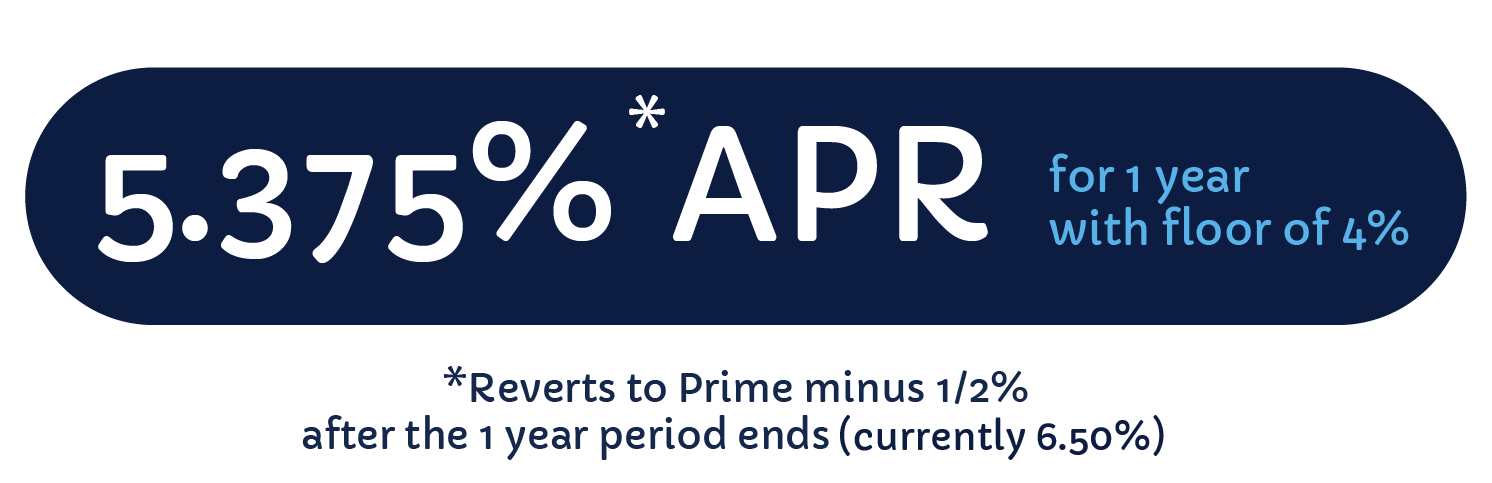
*Introductory Annual Percentage Rate (APR) of 5.375% is fixed for the first year. After the introductory rate, the APR is a variable rate based on the Wall Street Journal Prime Rate as published in the Wall Street Journal, - 0.500% (currently 6.50%), or 6.50% APR (subject to the floor/minimum rate of 4.00%, APR 4.00%) (Maximum rate to be charged is 15.00%, APR 15.00%), subject to change. Your actual (APR) may be different than the rates shown. APR is based on the specific characteristics of your credit application including but not limited to: evaluation of credit history, amount of credit requested, property type, lien position, and combined loan to value. Offer available for new lines only. All loans subject to credit and underwriting approval. Properties must be located in Owner-occupied primary residences or second homes only. No Trusts or LLCs allowed. $25,000 minimum initial draw is required at closing and must be maintained for at least six months from origination/funding date. The following fees apply: account closure fee of 1% of the current credit limit if the account is closed within 36 months from the date the account is opened; annual fee of $50 due each year of the draw period beginning with the 13th billing cycle; Other fees may apply to open the line and can range from $0 to $2,351(estimated). Not intended for homes currently for sale or intended to be sold within 12 months of closing. Property insurance is required. Flood insurance where required by law. Offer available for a limited time only and may be withdrawn at any time. Rates subject to change. Other restrictions may apply. Consult your tax advisor regarding the deductibility of interest.